
Friday, March 11, 2016
Women in Leadership Conference 2016
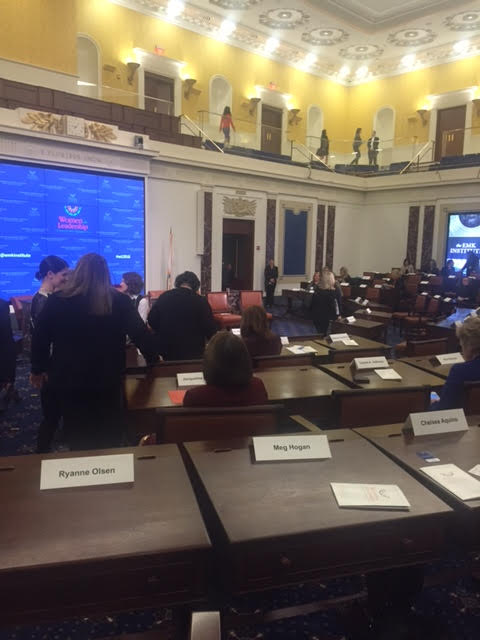
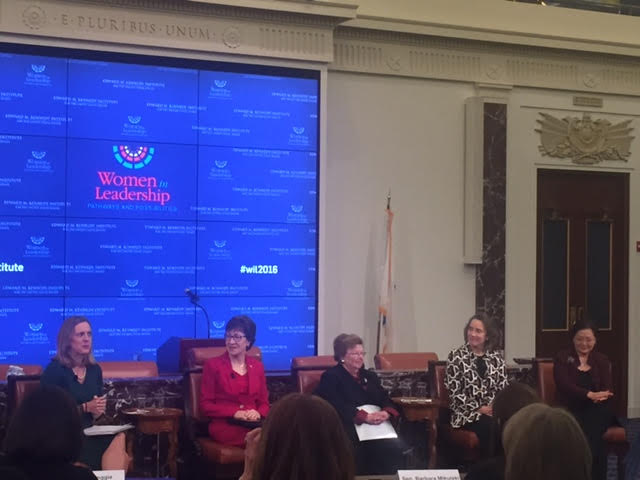
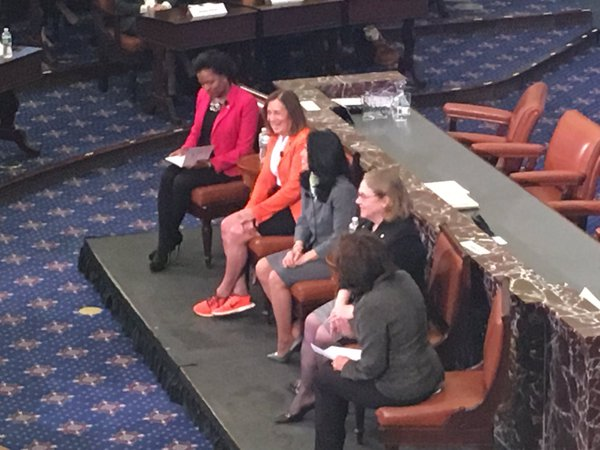
From politics to progression in representation, I love anything that stands for the recognition of women. When I learned that I was going to be able to attend the Women in Leadership conference at the Edward M. Kennedy Institute in Boston with the Massachusetts Women's Political Caucus, I was beyond excited. The event took place on March 7th, and the setting was beautiful. The building was brand new, and everything was set up very nicely. The event honored both Democratic and Republican women that publicly serve or have served in federal, state, and local levels. Everyone from Senator Elizabeth Warren, to City Councillor Ayanna Pressley, to Hawaiian Senator Mazie Hirono were in attendance. It was so refreshing seeing so much diversity within one event, and especially because it was full of strong, female political figures. Throughout the four panels, topics ranged from the presidential election, to female and minority representation, to public housing, to self love. Everyone discussed the issues that they all have faced because they are women within United States politics, and it was amazing getting to hear their stories and triumphs.
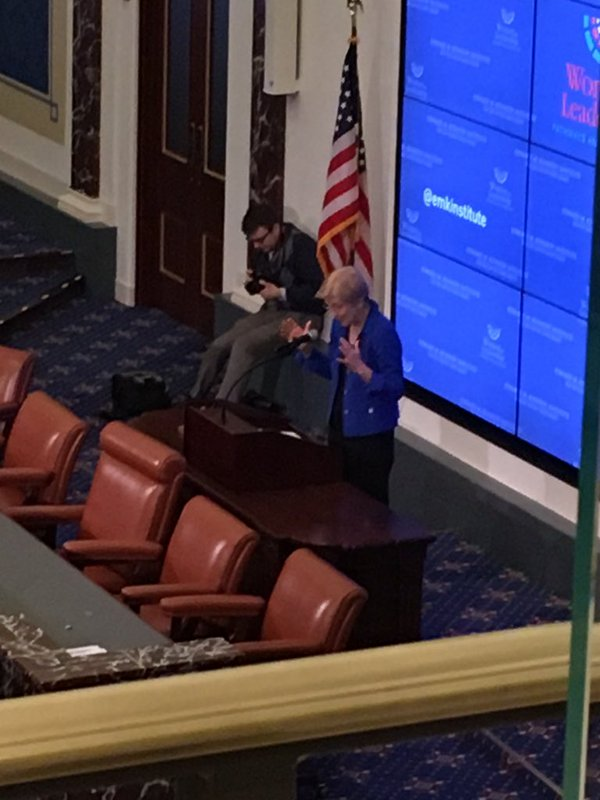
After being welcomed by Mrs. Victoria Reggie Kennedy, Senator Elizabeth Warren made an introduction, sharing her experience as a female candidate. Senator Warren stated that when she considered running, some told her “just don’t do it” and that “Massachusetts was not ready to elect a woman senator.” But despite all warnings she stood her ground, raised her voice, and won the 2012 election as the first female to be elected as Massachusetts’ Senator. And now she works to change the warnings of her past into a different message for the little girls she tends to come across. Senator Warren likes to engage with her young admirers and makes it a point to look them in the eyes and let them know that the reason she ran for senator, was simply because “that’s what girls do”.
The first panel was titled “Twenty and Counting,” and was moderated by NECN political reporter Alison King. This panel analyzed the progression of women within the senate.. The panel consisted of US Senator of Maine Susan Collins, US Senator of Hawaii Mazie Hirono, former US Senator of Arkansas Blanche L. Lincoln, and US Senator of Maryland Barbara M. Mikulski. Each of these women’s stories were very interesting. I especially found Senator Lincoln to be fascinating. She was a woman from the deep south who became the youngest women to be elected to the U.S. Senate at the age of 38. Along with this, she was the first female to serve as Chairman of the Senate Agriculture Committee. She brought up a very interesting and almost aggravating story about an event that she has attended in her career. She stated that as a female politician at the time, wearing a skirt and stockings was the professional attire, and that she would never wear a pant suit. Skirts and stockings were what was seen as the standard, so she followed that standard. During an event, on the stage were stools, and this is where her and her male counterparts would be sitting. She later found out that they personally requested the stools, and it was as if the system had set her up for failure. It was the standard for women to wear skirts, but when she did she was forced to either expose herself to the audience below, or stand for the entire event while everyone else got to sit. This story made everyone in the room upset, and I believe that this story is a great analogy of what women and all minorities have to face and succumb to. All four of these women had many firsts, and it was enormously inspiring.
Then the second panel came. This one being titled “Our Common Wealth.” Along with moderator Natalie Jacobson, former anchor for WCVB, the panel consisted of Senator Linda Dorcena Forry, Deborah Goldberg, Shannon O’Brien, and Keiko Orrall. The third panel, titled “Local Politics, Unlimited Leadership,”which was moderated by POLITICO reporter Lauren Dezenski, City of Boston Councilors Andrea Joy Campbell and Ayanna Pressley, and City of Boston Council President Michelle Wu were interviewed. Both of these panels touched on issues that everyone in the room was interested in, and it was so exciting getting to hear these accomplished women speak. During breaks, people could talk to each other and connect and socialize. I found this to be very rewarding, in that I got to meet women from all different types of organizations and backgrounds. Being so young, it was great to hear from women that have spent time fighting for a cause, whether they be apart of an organization or a politician themselves.
-Courtney Lynch, Intern

Thursday, March 10, 2016
Texas v. Women
Ladies, when it comes to the most recent Supreme Court case on abortion, Whole Woman’s Health v. Hellerstedt, do not worry about the little things! Justices Elena Kagan, Sonia Sotomayor and Ruth Bader Ginsburg have it covered. While hearing the case, Solicitor General Scott Keller was present to make arguments on behalf of the state of Texas. The arguments, which called for the support of abortion regulations that when put in place for two weeks, led to more than a dozen supporting clinics shutting down. It was no coincidence of course that when the regulation was lifted, the clinics reopened.
Keller argued that these regulations, requiring doctors to obtain admitting privileges from a hospital 30 miles from the clinic where they perform abortions, and requiring abortion clinics to comply with building regulations in order to be considered a “ambulatory surgical center” are quite necessary to protect women’s health. To put this into perspective, women would have to go to a surgical clinic to be prescribed the abortion-inducing pills even though no surgery is required. These new provisions raise a question of constitutionality on the right to abortion, as it may just be that these laws are presenting a burden on something that the female population has a right to do.
Well our ladies on the Supreme Court were just not having it that day. Keller went on to argue that even though abortion clinics tend to be out of the way, 100 miles or more for some, those living in El Paso can easily have access to abortion clinics in New Mexico, where no such regulations exist. He was forced to say bye-bye to the “protecting women’s health” argument, and clearly Mr. Keller wasn’t covering all of his bases, when Justice Ginsburg threw him a curve ball stating, “So if your argument is right, then New Mexico is not an available way out for Texas because Texas says to protect our women, we need these things”.
What I can’t seem to get over is the audacity to even bring such a case up before the Supreme Court. What benefits does the state of Texas stand to gain if these laws are put into place? Of course the conservative wing gains a win, but realistically, the health and well-being of women considering abortion services are more at risk than they’ve ever been. Hear me out Texas! By implementing these regulations, again, don’t you think we’re moving backward?
How much longer can you chastise the women of Texas because of your bias towards abortion? Did you stop to take into account the issues that would arise if these clinics close because of your absurd regulations? For all we know, and I hope this doesn’t occur, we could revert back to the time of botchy abortion jobs, mothers fighting depression and stress because of forced unwanted pregnancies, and even an increase in taxes due to the demand for state-assistance in proper childcare and nourishment. Depending on the Supreme Court’s decision, we may have to face these fears soon.
http://www.supremecourt.gov/oral_arguments/argument_transcripts/15-274_l53m.pdf
- Luisa Ibner, Intern
- Luisa Ibner, Intern
Friday, March 4, 2016
7 Facts You Didn’t Know About Women’s Struggle for the Vote
The Women’s Rights Movement was born out of and modeled after the Abolition Movement. Women’s suffrage and abolition were often intertwined and advocated for by the same activists until 1868 when African-American men won citizenship, but women did not. For there, the Suffrage Movement was divided into those who remained committed to both gender and racial equality and those who thought women’s rights should be prioritized.
“Suffragist” and “suffragette” are not interchangeable. American women fighting for the vote identified themselves as suffragists, while British women chose to be called suffragettes. Suffragette started out as a derogatory term.
The first ever women to run for president, Victoria Woodhull, ran in 1872 before women had won suffrage.
Many suffragists were jailed for picketing, often silently, outside the White House. While in prison, they went on hunger strikes until they were violently force fed.
Wyoming was the first state to grant women the right to vote and the first to elect a female governor (Nellie Tayloe Ross in 1925).
The 19th amendment passed by one vote after a young legislator from Tennessee changed his vote to “yes” at the urging of his mother.
While Black women legally won the right to vote with white women in 1920, they faced social, political and economic barriers to citizenship that white women did not. It would take another major movement—The Civil Rights Movement—and 40+ years of struggle before Black women achieved true enfranchisement.
Tuesday, March 1, 2016
2016 Oscars: Shedding the Light on the Epidemic of Sexual Assault
*Trigger Warning*
Thirty-four million people watched live as Lady Gaga and 50
survivors took the 2016 Oscars stage on Sunday to call attention to the rampant
rates of sexual assault on college campuses.
Gaga’s song “‘Til It Happens to You,” co-written by Diane Warren, appeared
in The Hunting Ground, Kirby Dick and
Amy Ziering’s 2015 documentary
exposing the institutional cover-ups of campus rape and the brave students
using Title IX to fight back. While
“‘Til It Happens to You” did not win Best Original Song, it left a larger
impact than winning any award could have.
Vice President Biden opened the performance by urging the
audience to “take the pledge” to intervene
and “change the culture” of blaming survivors for their assault. Lady Gaga then
appeared in all white at a white piano in the center of the dark stage. Starting slowly and building in intensity,
Gaga’s performance was both gut-wrenching and empowering. She sang passionately, tearing up at times,
almost jerking in anger at others. Joined
by an orchestra for the chorus, Gaga stood as survivors began to flood the
stage. They held out their arms to show
phrases written in black: “survivor,” “unbreakable,” “not your fault,” and “it
happened to me.” The emotion was
palpable. The performance ended with the
survivors joining hands and, along with Gaga, raising them above their heads in
a show of strength and solidarity.
1 in 5 women and 1 in 16 men will be sexually assault while
in college. 68% of all assault go
unreported and 98% of rapists never see a jail cell. With statistics like these, we hope the
national attention brought about by The
Hunting Ground and Gaga’s Oscar performance spurs collective action. The overwhelmingly positive reactions to both
the film and the song are certainly heartening.
Lady Gaga recently released a powerful music video of “‘Til
It Happens to You,” which you can watch here.
--Kathleen Melendy, MWPC Intern
Friday, February 26, 2016
GOP Candidate John Kasich’s Comments and How This Isn’t New to United States Politics
Courtney Lynch 2/26/16
GOP Candidate John Kasich’s Comments and How This Isn’t New to United States Politics
John Kasich, a current Republican nominee for the 2016 presidential election and current governor of Ohio, recently made a comment at one of his rallies that caused an uproar across the nation. His comment stemmed from his conversation on a previous campaign for state legislature from 1978, where he claimed that he was elected into office at such a young age due to his “army of supporters.” However, he then stated that among his supporters were women who “left their kitchens” to campaign on his behalf. Now, this comment can obviously be seen as one of misogynistic interest, especially seeing that it is coming from a GOP candidate who has in the last week signed a bill that will defund Planned Parenthood in the state that he governs. Backlash came upon him almost immediately, as a woman who attended the rally questioned Kasich about his remark:
"First off, I want to say your comment earlier about the women coming to support you? I'll come and support you, but I won't be coming out of the kitchen.” Kasich responded with a simplistic, “I got you,” and the rally carried on.
Now some can say that his comment wasn’t an attack on what the status of the modern day woman should be in the United States, rather than a remembrance of how the times were back then, when many women did in fact stay at home. Nevertheless, this definitely isn’t the first time that a male politician has made unfavorable and invalidating comments towards women in their public rallies, interviews, speeches and statements. Whether it be former Republican Congressman Todd Akin making his incredibly dismissive and misinformed comment on the female anatomy in 2012; "If it’s a legitimate rape, the female body has ways to try to shut that whole thing down,” or Wisconsin State Senator’s very insightful comment and concept referring to his vote that would repeal an equal pay law devised to go against income discrimination between men and women;
“Money is more important for men. Take a hypothetical husband and wife who are both lawyers. But the husband is working 50 or 60 hours a week, going all out, making 200 grand a year. The woman takes time off, raises kids, is not "go go go." Now they're 50 years old. The husband is making 200 grand a year, the woman is making 40 grand a year. It wasn't discrimination. There was a different sense of urgency in each person.”
While these are two more current examples of what two men think women are capable of and want within their own lives, male opinion of women and the issues that women face has always been prevalent in United States politics, and can be traced back to the likes of the ‘Founding Fathers’. Thomas Jefferson made many public quotes on his opinion of women, including themes that are still commonplace within recent history, such as “how women should dress and appear.”
"Nothing is so disgusting to our sex as want of cleanliness and delicacy in yours." Thomas Jefferson once stated (As cited in Nock, 1966, p. 59). He also once stated, as cited in Miller, 1995, p. 184, “The appointment of a woman to office is an innovation for which the public is not prepared, nor I.”
To women in the 21st century, these dated comments may not seem as decrepit as they actually are. Kansas Republican state senator Mitch Holmes recently stated some very controversial opinions on how women in political office should dress, and established an “11-point dress code that explicitly prohibits women from wearing low-cut blouses and certain skirt lengths when addressing the Senate committee.” When asked if Senator Holmes believed that men in political office should have a dress code, he thought about it, but then decided against it, stating, “[he felt] men didn’t need any instruction on how to look professional.” Thank you, Senator Holmes, us women do indeed need instruction from you so badly. However, it seems as you may need some yourself.
Women facing comments made by male politicians at this point is just so commonplace that it has become something that seems accepted. It has to have been, if the themes of conversation from the 1700’s can be carried on into present day.
(http://www.huffingtonpost.com/entry/john-kasich-women-left-kitchens_us_56cb3a6be4b041136f17990d)
Subscribe to:
Posts (Atom)
